
The Perfect Wash Menu Has Only Three Washes
Most menus try to do too much. Six or seven packages, clever names, and a wall of tiny icons. Here's how cutting down to three clear washes gets people to trade up on their own.
By the OptSpot Team
Walk up to most wash menus and you'll find six or seven packages, a wall of tiny icons, and names like "Super Deluxe Platinum Shine." The operator built it that way on purpose, figuring more options would sell more washes.
At the pay station, it plays out the other way. A new customer scans everything, can't tell one package from the next, and picks the cheapest wash just to end the decision. Every time that happens, you lose the trade-up you were counting on.
That gap adds up faster than most operators realize. Picture a driver choosing your $12 wash when a clearer menu would have moved them to the $20 one. That's eight dollars gone on a single car. Multiply it across a busy day, then across a full year, and a cluttered menu costs you more than almost anything else on your lot.
You might already feel it
- Your cheapest wash is your best seller.
- Your average ticket hasn't moved in a year.
- New customers pause and squint at the board before they choose.
If any of that sounds like your wash, the menu is working against you. Fixing it is cheap and fast, and it's mostly a matter of taking things away.
Your menu isn't a list of everything you offer. It's a tool that helps a driver choose fast and feel good about the choice. A clear menu gets people to trade up on their own. A crowded one makes them play it safe and spend less. Let's walk through how to build one that sells for you.
Offer three washes
Give people three washes to choose from, and no more. We aren't wired to compare a long list of options. Show someone six packages and their brain gets tired, and a tired brain defaults to the safe pick, which is almost always the cheapest wash. Keep it to three and the choice stays easy, and an easy choice is the one that moves people up.
Three options also create a natural middle. Most drivers don't want the bare minimum, and few will jump straight to the top on their first visit. The middle wash feels like the sensible pick, so it quietly raises your average ticket without anyone having to sell harder.
Name them Basic, Better, Best
Clever names are fun to write and hard on the customer. Read "Titanium Hydro Guard" and you can't tell whether it's better than "Platinum Glow." Now the driver has to crack your naming code before they can even choose, and every second of confusion costs you the sale.
Basic, Better, Best does that thinking for them. The order is clear, and the step up in value is clear. A first-time customer knows where each wash sits almost instantly. If "Basic" feels too plain for your brand, Good, Better, Best works just as well. You can add a small brand name to each tier if you like, but let the plain word lead so the ranking stays obvious.
Sell the result, not the chemicals
Most menus list what goes into the wash: triple foam, carnauba, hot wax, ceramic seal. Your customer doesn't know what most of that does or why it should matter to them. Those features rarely convince anyone to spend more. People buy the result they can picture.
Under each wash, write one short line about what the driver actually gets. Focus on the payoff, not the ingredient.
Basic
A fast, clean car for everyday driving.
Better
A deeper clean that protects your paint and keeps it looking newer.
Best
Your strongest shine and protection, so the car stays cleaner between visits.
It's the same wash either way. The second version just tells the customer why they'd care.
Cut the icons and clutter
Icons feel helpful, but they work against you. A grid of a dozen symbols across four columns turns your menu into a spreadsheet. The customer's eyes dart around comparing rows, and all that comparing gets in the way of a quick yes.
White space does more for you than another icon ever will. Three washes, one clear price each, one benefit line each, and room to breathe around them. A menu that looks simple makes the choice feel simple.
Make the Best wash the easy yes
You want eyes on your top wash, so build the menu to lead them there. Give the Best option a little more room or a different color, and add one honest reason it's worth the jump, like a longer clean or stronger protection.
Keep the price gaps between tiers small and even. When Better is only a few dollars over Basic, and Best is only a few dollars over Better, moving up feels like a small, easy yes instead of a big splurge.
None of this is a trick. You're pointing customers toward the choice that serves them best, which is exactly what a good guide does.
This actually works
One operator cut their menu from six washes to three during a system switch. Within three days, their cheapest wash fell from nearly half of all single washes to about a third. Drivers started reaching for the better packages on their own, and the crew noticed the shift before the owner even pulled the numbers.
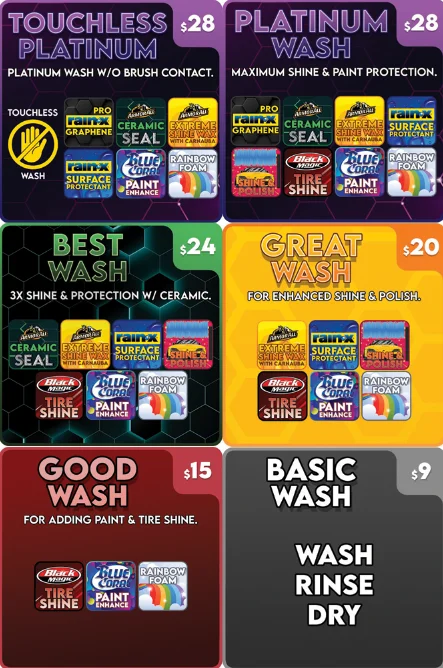
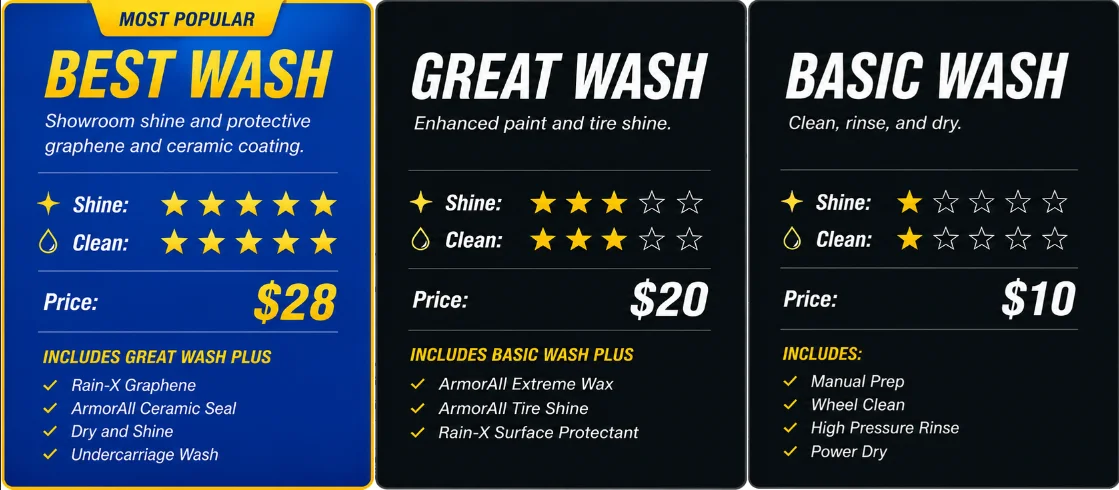
Another operator runs a simple three-tier ladder with the top wash priced highest. That top wash is their most-picked option every single month, by a clear margin, even though it's the most expensive one on the board. When the menu makes trading up easy, people trade up.
Nothing changed at these washes except the menu, and the average ticket followed it up. No new equipment, no new chemicals, no harder selling at the pay station. They just got out of the customer's way.
When to make the change
You don't need a slow season or a big reason to clean up your menu. A few moments make it especially easy:
Switching POS or wash systems
You're rebuilding the menu anyway, so build the simple one from the start. Both operators above made their move during a system switch.
Rebranding or updating signage
New menu boards are the natural time to drop from six washes to three.
Raising prices
A clearer menu softens the sting, because customers focus on what they get instead of counting the extra dollars.
Opening a new site
Start clean rather than copying an old, crowded board.
Anytime your cheapest wash is winning
If the low package leads your sales month after month, don't wait. That's the menu telling you it's steering people the wrong way.
If none of those are on the calendar, you can still make the change on a quiet Tuesday. Reprint the board, update the screen, and train your team on the three new names. Most operators can pull it off in a week.
The takeaway
Your customer wants two things: a clean car and a decision they don't have to labor over. Every extra package, clever name, and tiny icon gets between them and that decision. Cut it down to three clear washes, name them so a stranger understands at a glance, describe the result instead of the parts, and guide people toward your best option. Do that, and your menu stops reading like a price list. It starts earning its keep like your best employee.
Want a menu that sells for you?
Let's build a menu that moves people up.
OptSpot helps car wash operators clarify their pricing, grow memberships, and raise their average ticket without harder selling. Let's look at your menu together.
See If It's the Right Fit